Makers · Darling Downs
Bunnings Wanted His Bug Zapper in Every Store. This Toowoomba Sparky Said No.
Darren Whitfield built it in his shed after a mozzie bite cost him four months of work. When Bunnings came calling, they had a list of changes he couldn't live with.
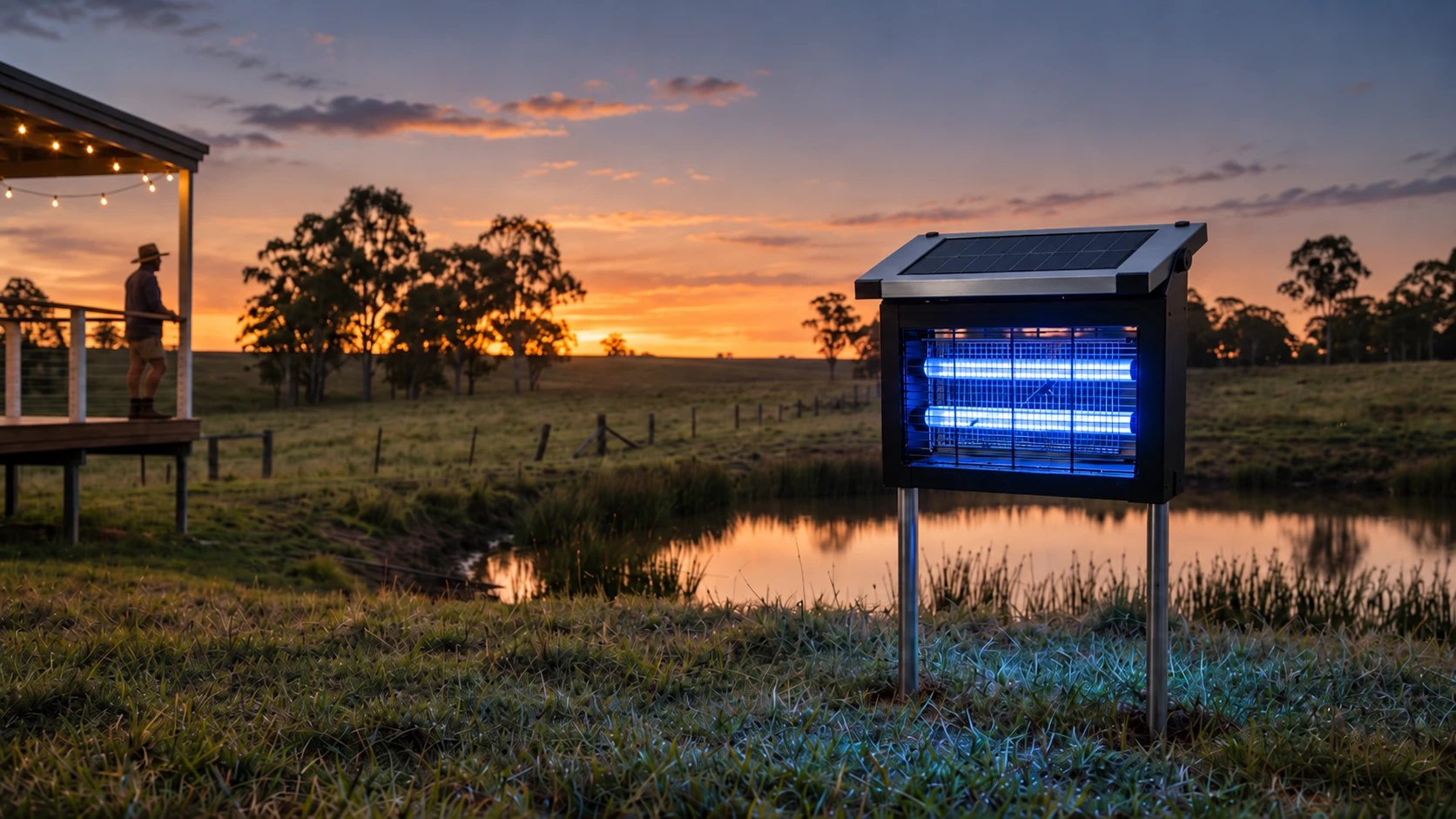
It's half past six on a Thursday and the light is going orange over the paddock behind Darren Whitfield's place, a few kilometres out of Toowoomba. His son is setting the table on the back deck. Down the slope, the farm dam sits flat and still, and the air above it has already started to hum.
Darren doesn't look up. On the lawn between the deck and the dam, a squat charcoal box on two steel legs switches itself on, and a blue light starts to glow behind its wire grid.
"Watch the deck," he says. "Nobody's getting bitten tonight."
Five years ago, nobody in this family would eat outside after dark. In 2023, Darren had the chance to put the thing on that lawn into every Bunnings in the country. He said no. This is the story of both.
The summer the dam turned on him
Darren is 54 and a sparky by trade. He's run his own electrical business on the Downs for most of his working life. He and his wife Kerry moved onto five acres outside town in 2014 for the space, the quiet and the dam, which their two kids used as a swimming hole for the best part of a decade.
Then came the wet years. From late 2020, three La Niña summers in a row filled the dam to the brim and left the low corners of the block soggy for months. "Every bit of still water out here turned into a nursery," Darren says. "You'd walk out at dusk and they'd come up off the grass at you like smoke."
In February 2021 he noticed a stiffness in his hands and put it down to age. Within a fortnight he couldn't grip a screwdriver. The blood test came back positive for Ross River virus.
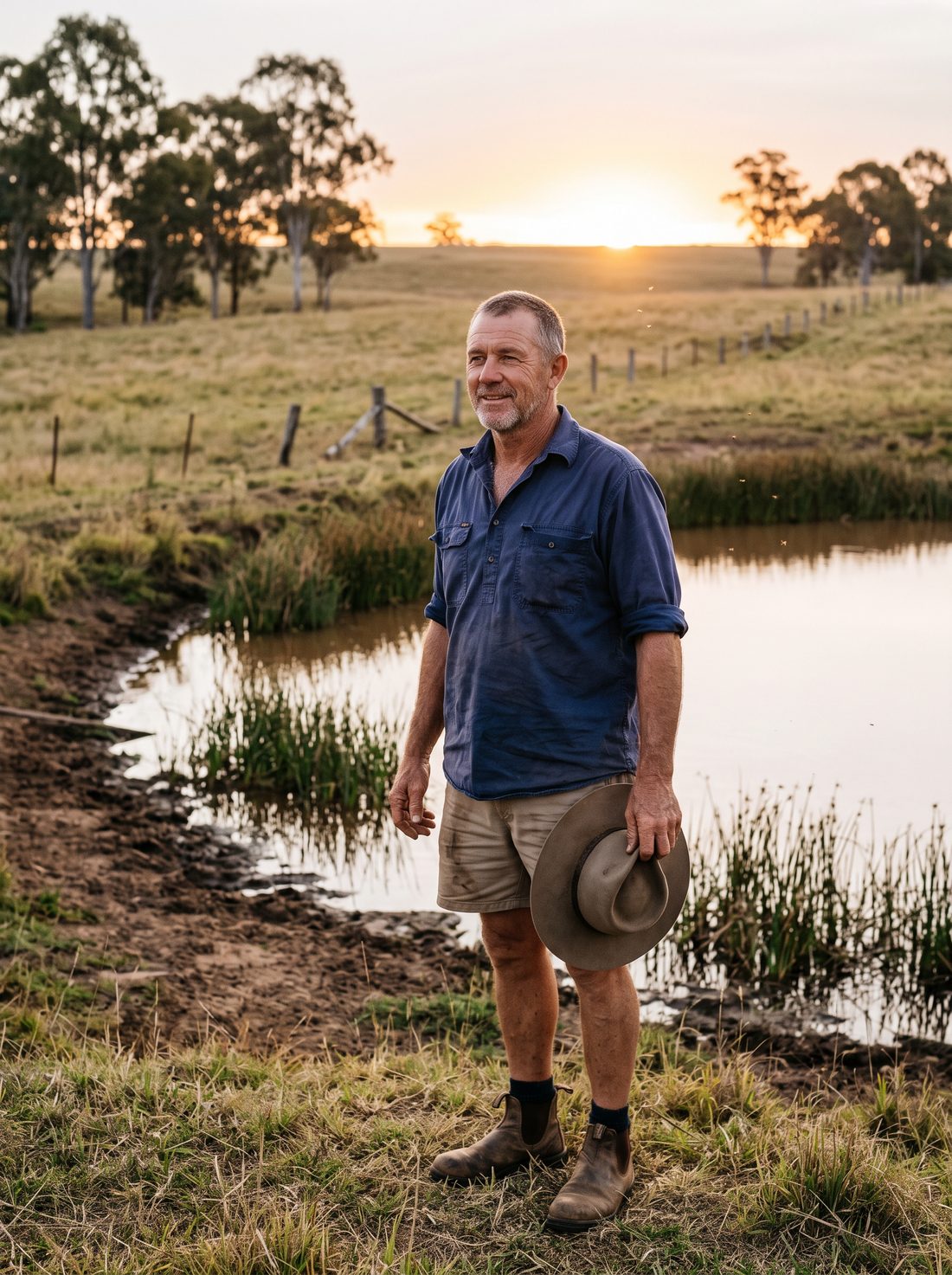
"Four months," he says. "Four months I couldn't get up a ladder. When you're a one-man business, that's four months of nothing coming in."
The kids, Jack and Ellie, now 17 and 15, stopped eating on the deck altogether. Kerry kept a can of spray by the back door like a fire extinguisher.
Nothing at Bunnings was built for out here
Like most tradies, Darren practically lives at Bunnings. So when he decided to fight back, that's where he went first. Over the next two summers he bought most of what was in the pest aisle, and every product hit the same kind of wall.
The plug-in zappers needed mains power, which meant an extension lead across wet grass. "Thirty years I've been an electrician," he says. "I'm not running a lead across a soggy lawn every night with kids and a dog around. That's how people get hurt."
The battery zapper did the job, until about eleven o'clock, when the battery went flat. Mosquitoes don't knock off at eleven.
The coils and repellers kept a decent circle around the table until the breeze came up off the paddock. Out here, it always comes up.
"None of it was rubbish," he says. "It was all made for a courtyard in the suburbs. Nobody had made one for a place like this."
So he built one
Darren started the way a sparky would, on paper. He wrote down every reason the products in his shed had failed and set himself four rules.
- 1No cord.It had to power itself. Nothing to plug in, nothing to trip over.
- 2All night.Not until eleven. On at dusk, off at dawn, without anyone touching it.
- 3Down low.Mozzies cruise close to the ground, around ankles and knees. A zapper hanging from the pergola is too high to be in their way.
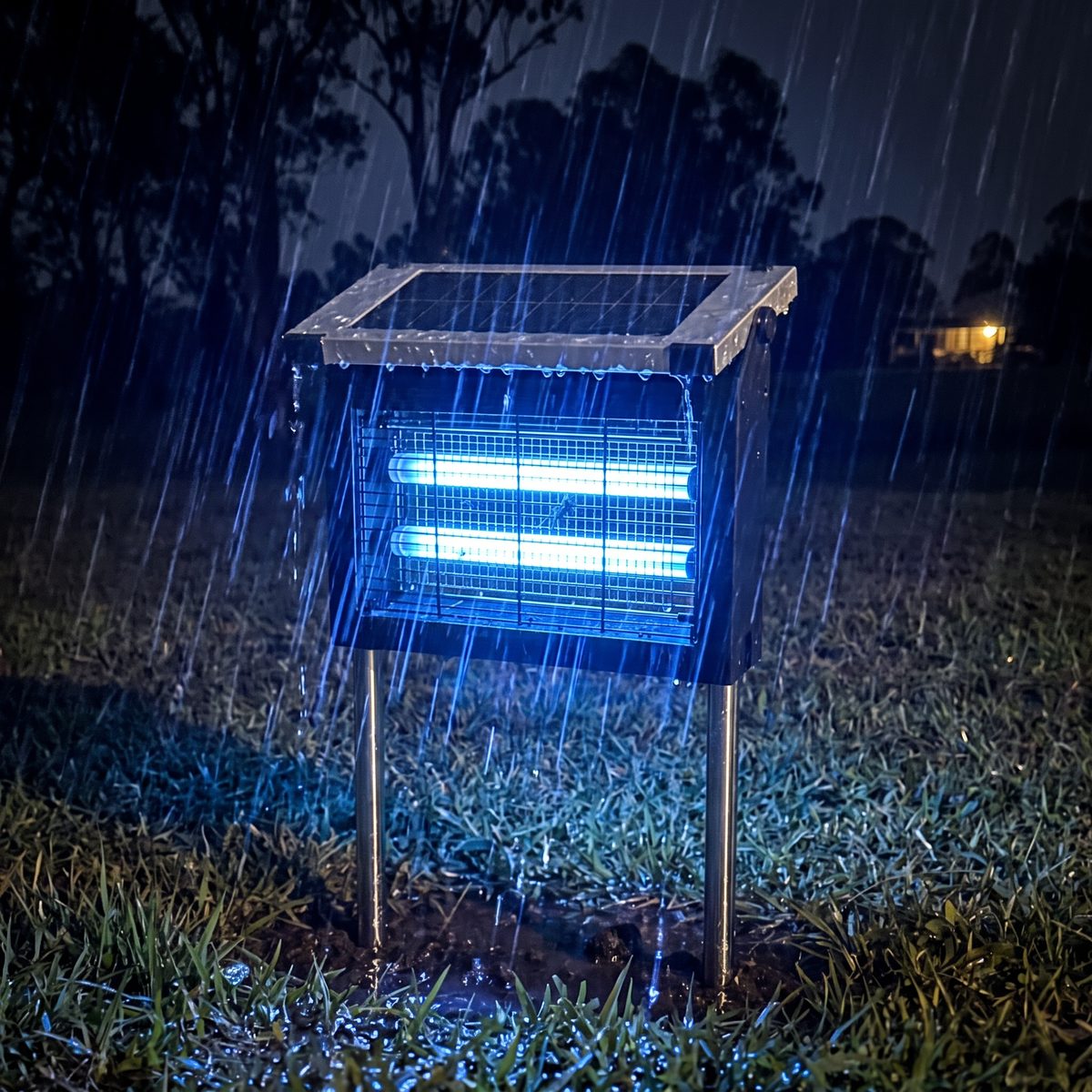
- 4Tough.Forty-degree days, hail, frosty winter nights up on the range, and a hose when it gets dirty.
It took eighteen months and eleven prototypes to get there, and most of them failed in ways he hadn't seen coming. Number four cooked its own battery on a 41-degree day in January. Number six survived the heat, then lost its panel to a hailstorm. Number eight worked perfectly for nine nights and then didn't switch on at all. It took him three weekends with a multimeter to find out why.
None of it was cheap. Parts, test batteries, a short run of steel housings from a fabricator in Brisbane. Darren paid for all of it out of the electrical business, and by the end of 2022 it had cost him close to $40,000. Most of that was the money they'd put aside for a new roof. "Every time I looked at the bank account it was smaller," he says. "And I'd go out to the shed and the bloody thing still didn't work."
He gave up twice. The first time, he packed the parts into a tub and pushed the tub under the house. The second time, after number nine, he told Kerry over dinner that he was done. It was a hobby that had got out of hand, and he'd rather have the roof.
Kerry had other ideas. "I said, you've talked about this thing every night for a year and a half," she says. "You don't get to stop when you're nearly there. And I'm not spraying the kids at the back door for another ten years." He was back in the shed the next morning.
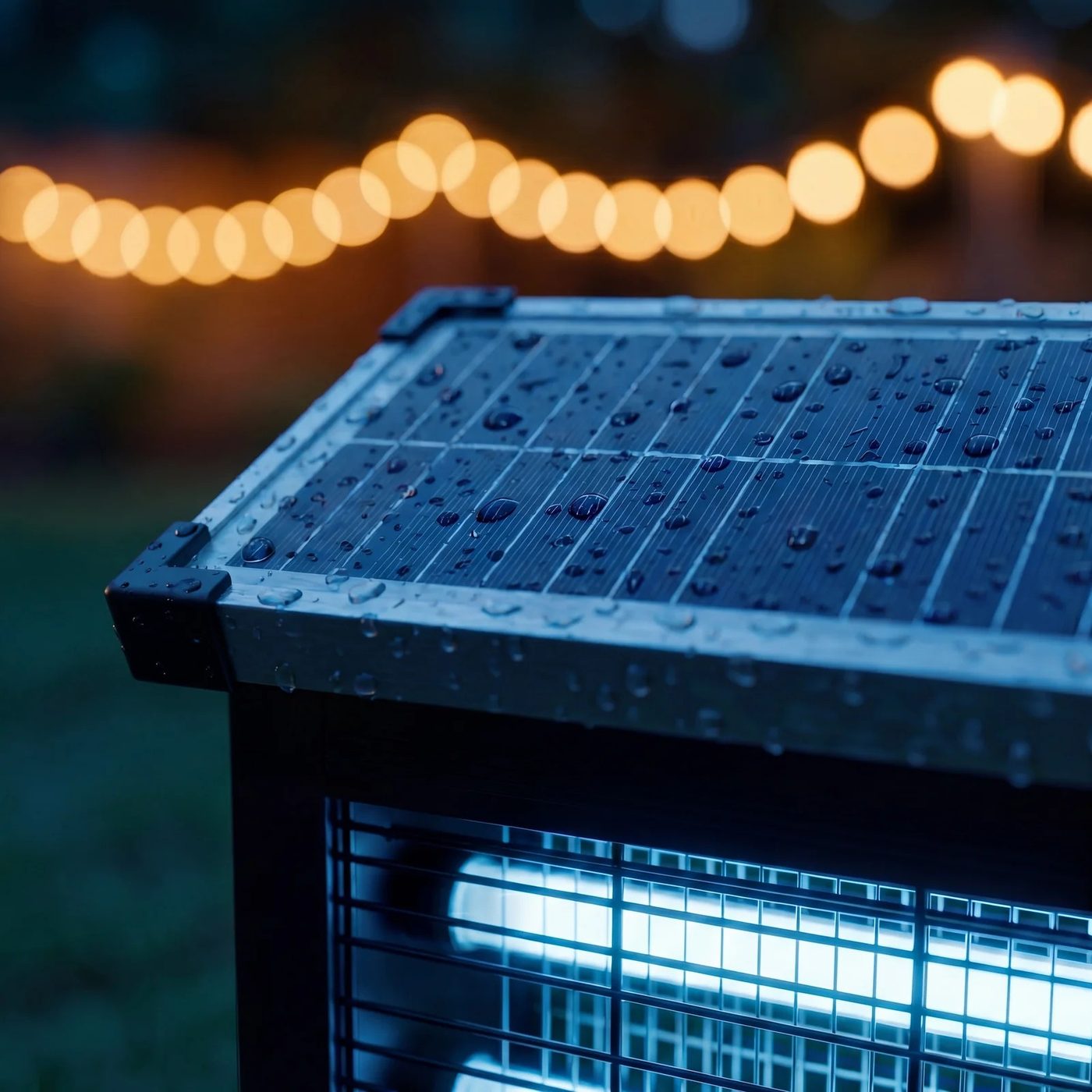
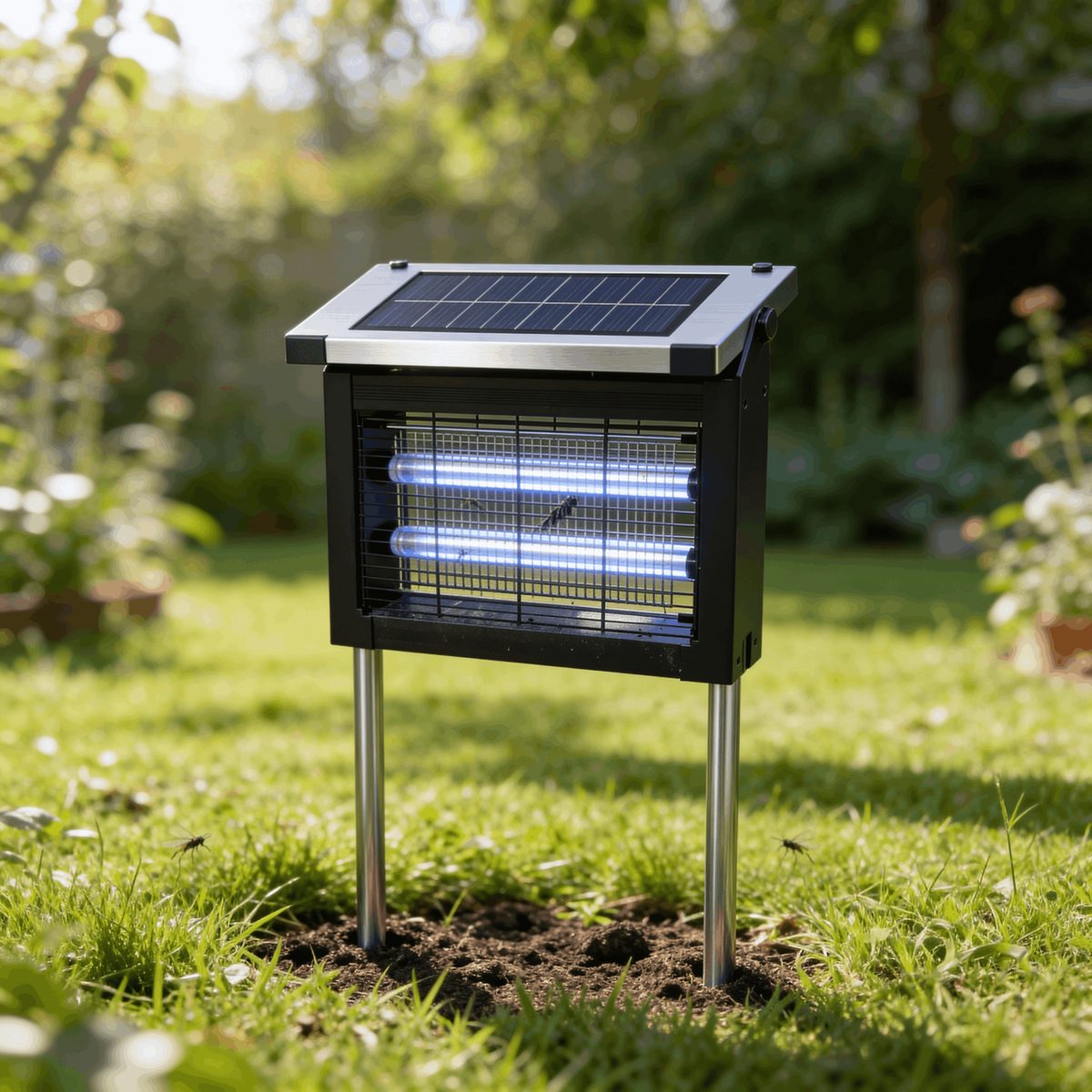
Two prototypes later, the design settled into what sits on his lawn today. There's a flat solar panel on top and a battery sized to run through the night. Two UV tubes sit behind a 4,500-volt grid, and a pull-out tray catches whatever it kills. Two steel stakes push straight into the ground, and a light sensor does the rest.
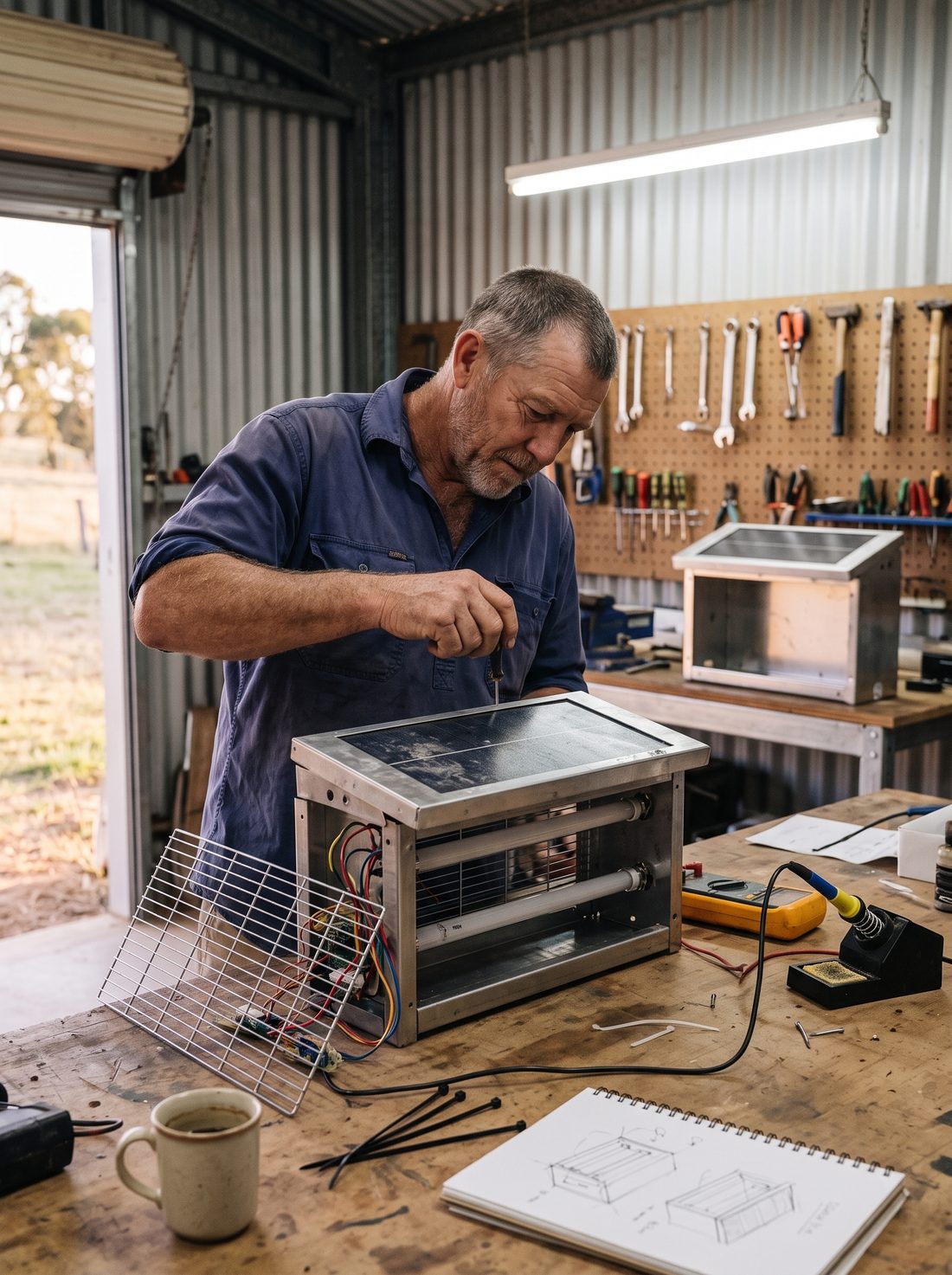
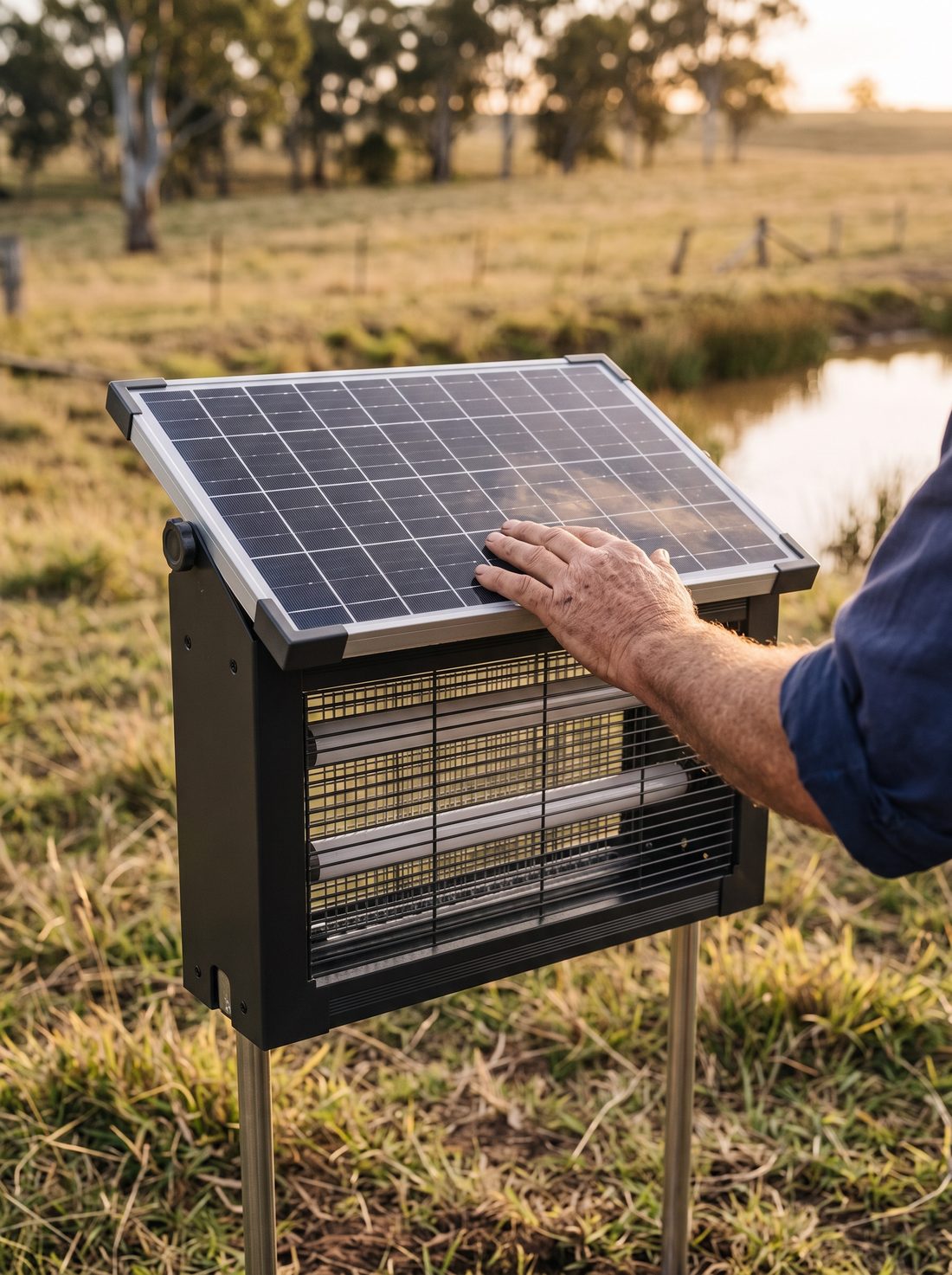
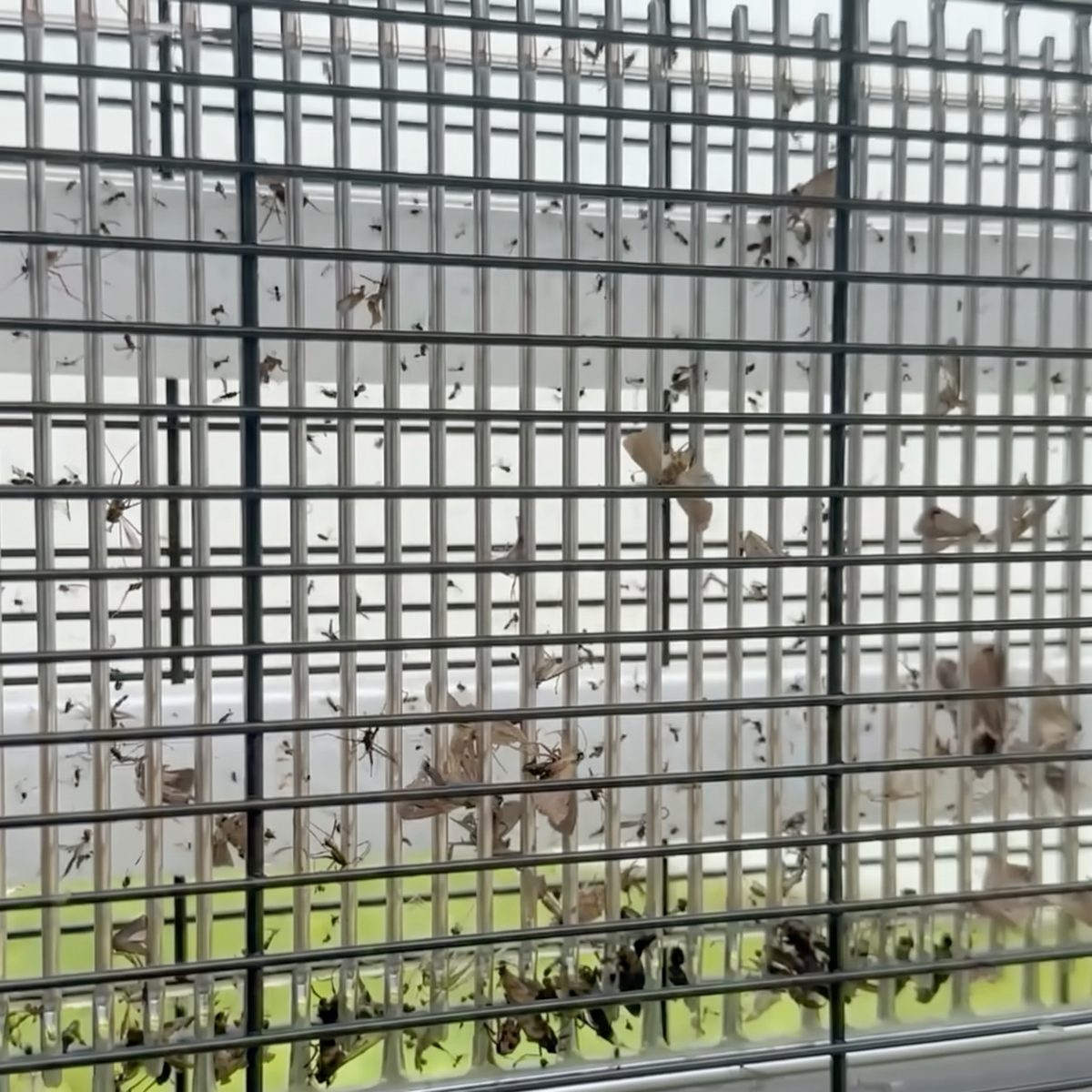
The first time he ran it overnight, he walked down at sunrise to check the tray. "I just stood there," he says. "Mozzies, moths, the lot. I took a photo and sent it to Kerry, and she was only inside."
Word got around the way it does in the district. The neighbours wanted one, then a few blokes from the footy club, then a mate who runs a caravan park near the Condamine. Darren built a small batch, sold every one, and built another.
Then Bunnings called
In March 2023, Darren got the email every small Australian maker hopes for. Bunnings had seen the Sentinel and wanted it in their stores for summer.
He went into the meeting excited, and came out of it understanding how big retail works. Bunnings has to make money on every product it sells, across hundreds of stores, with staff, freight and floor space to pay for. But once their share was added, the full-spec Sentinel would have sat on the shelf at nearly double what Darren charges.
So Bunnings suggested a way to bring the price down. A smaller solar panel. A cheaper battery. Lighter stakes.
The trouble was, he'd already built that version. "That's the one that goes flat at eleven at night," he says. "I tested it, and I binned it."
The same unit on his lawn, priced out of reach for most of the families who'd asked him for one.
Turned downA smaller panel and a cheaper battery. Flat by eleven, the same problem he'd built the Sentinel to fix.
Turned downFor Darren, the Sentinel was never about getting into a big store. It was about families being able to sit outside on a summer night without getting eaten alive, the way his couldn't for years. A cheaper version that gave up halfway through the night wouldn't do that.
"I didn't build it to be in Bunnings. I built it so people could eat outside again."Darren Whitfield
So he thanked them, shook hands and said no. "I could've been in every Bunnings in the country," he says. "But not with something I knew was second best. If an Aussie family's going to spend their money on one, it should be the proper one."
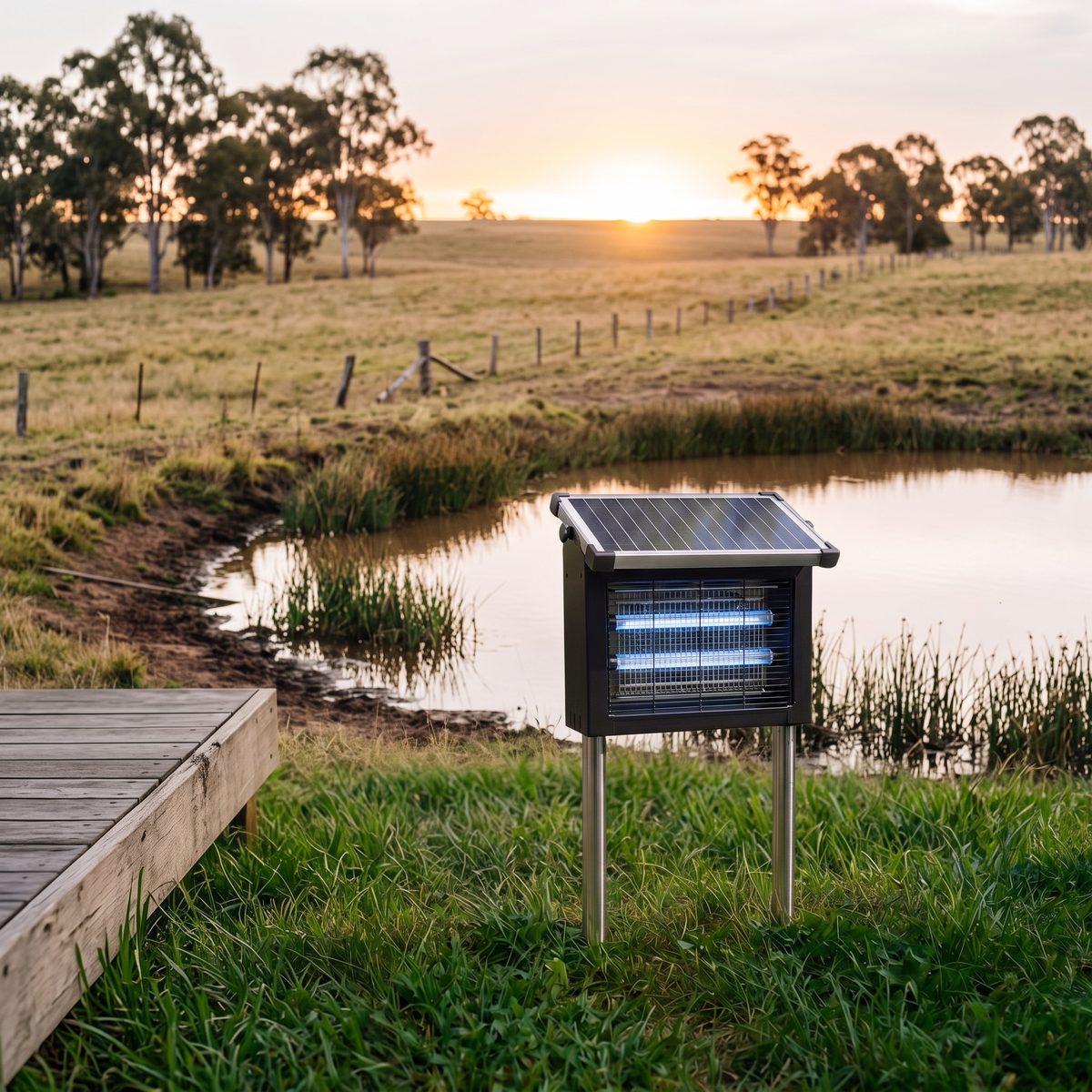
See the version Darren wouldn't cut down →
What saying no cost them
Saying no to Bunnings felt good for about a week. Then the Whitfields had to work out how to sell a bug zapper with no shelf, no catalogue and nobody who'd ever heard of it.
Neither of them knew the first thing about websites. Kerry had spent twenty years doing the books for an accounting firm in town, and for Darren's business. She taught herself the rest at the kitchen table at night, from YouTube videos. It took her four months to get the first version of the website live. "I cried at it twice," she says. "The checkout didn't work for the first week and we didn't even know."
They'd assumed that once the site was up, the orders would come. In the first six months they sold four. Two of those were to people they knew.
Darren went back to full-time sparky work to keep the lights on, and the shed went quiet again. What kept them going was the people who did buy. Nearly every one of them wrote back, and most sent a photo of the tray.
- March 2023Darren turns down Bunnings.
- July 2023Kerry's website goes live after four months of late nights.
- January 2024Six months in, four sales. Darren goes back to sparky work full time.
- Summer 2024–25A customer's tray photo does the rounds of a Brisbane parents' Facebook group. Orders pass 300 in a single month.
- TodayMore than 2,400 reviews from every state. Still a family business, still run out of Toowoomba.
It's better now. It still isn't easy. Darren still does sparky jobs three days a week. Every winter they have to guess how much stock to order for summer, and every summer they find out whether they guessed right. When the big chains run a sale, they can't.
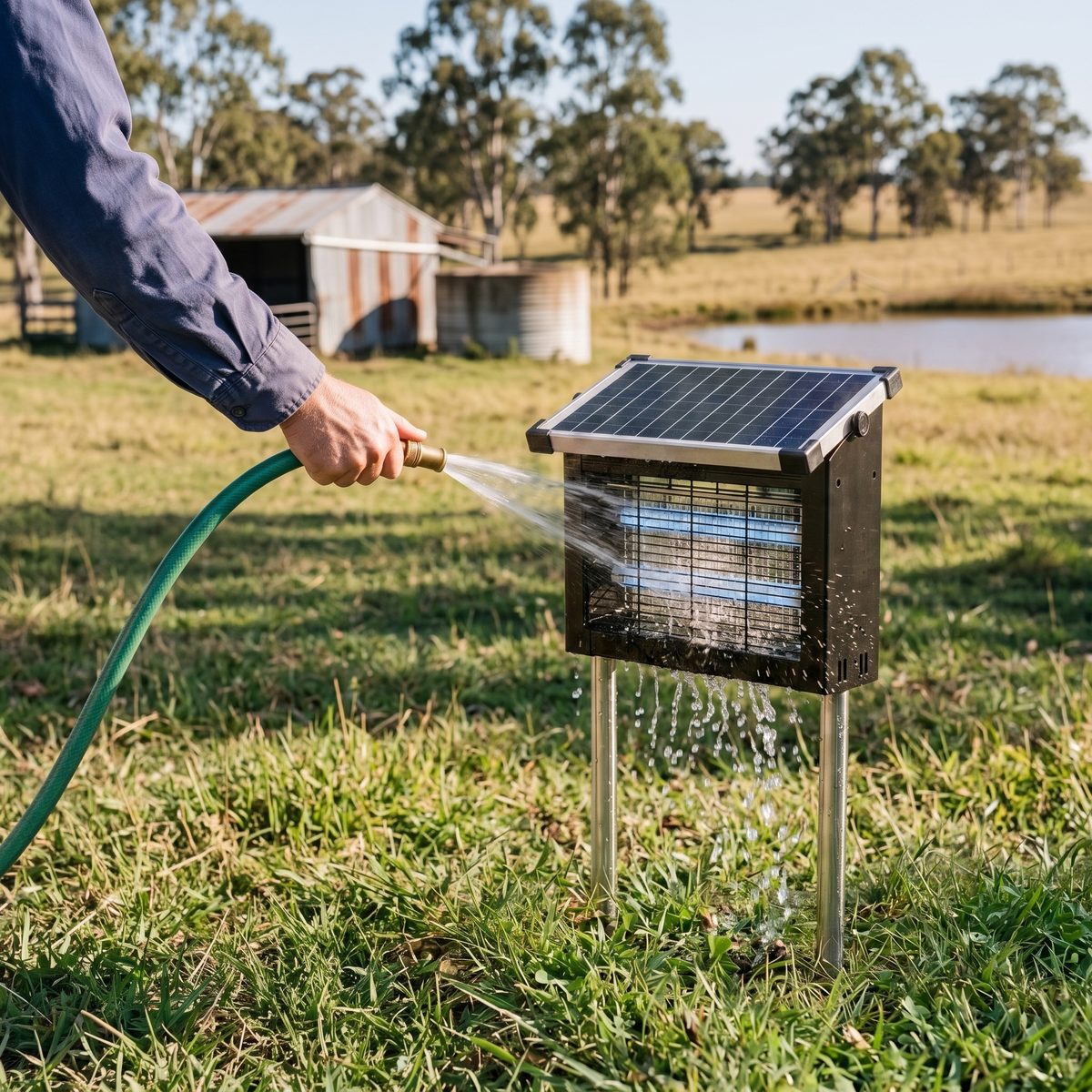
"I don't regret it," Darren says. "But I won't pretend it's been easy. When people ask why it's not in Bunnings, I tell them. I wanted the one on my lawn to be the one you get."
The Sentinel is still sold only through GroundGuard's own website. You won't find it in Bunnings or any other shop. It also means the Whitfields carry the guarantee themselves. Every unit comes with 60 days to try it in your own yard, and if it doesn't do the job, you send it back for a refund. Between them, they still read every email, most nights after tea.
"If someone's not happy, I want to hear it from them," he says. "Not from a returns docket with no reason on it."
What his customers say
We back onto the river at Goodna and the mozzies are biblical. First morning the tray was black. The wife wants a second one for the front yard.
We're on the canals in Mandurah, so mozzies come with the postcode. Put it between the jetty and the patio, and we had people over after dark for the first time in two summers.
Mostly just glad there's no cord. The kids run round the yard after dark and I'm not worried about them tripping over a lead.
The build-up in Darwin is brutal. It's been out since October and hasn't missed a night, even after a few big storms. Hosed it out on Sunday and it was good as new.
Our season's shorter than up north, but the Murray makes up for it. Midges were the big one for us and the tray's full of them every morning. Only four stars because I should've bought two.
Had it by the chook pen since October. Hosed it off twice, still going. Wish I'd bought it before the Gecko and the battery one.
Questions people ask Darren
Can I buy it at Bunnings or another store?
No. The Sentinel is only sold through GroundGuard's website, with free shipping across Australia.
Will it kill bees?
No. Bees are back in the hive before dark, and the Sentinel only switches on at dusk and off at dawn. It runs on a light sensor, so it's off the whole time bees are out.
What bugs does it actually kill?
Anything that flies at night and is drawn to UV light. That means mosquitoes, midges, sandflies, flies, moths, wasps and hornets. Check the tray in the morning and you'll see the lot.
Is it loud? Will it buzz all night?
No constant hum. You'll hear a faint click each time it catches a bug, but there's no buzzing bulb or motor. Staked a few metres out in the yard, most owners stop noticing it after the first night.
How long does it run on a charge?
A full charge runs it about 8 to 10 hours, from dusk through to early morning. The light sensor switches it on at dusk and off at dawn, so it only draws power when it's actually dark. No switches, no timers, no babysitting.
What if we get a week of cloud?
The panel still charges on overcast days, and there's a USB-C port for a top-up if you need it.
Is it safe with kids and pets around?
The 4,500-volt grid sits behind an outer wire cage, so little fingers and noses can't reach it. There's no cord to trip over and no chemicals to breathe in.
How much yard does one cover?
Around 195 square metres, roughly a normal backyard. Most people buy two or three so they can cover the front and the back, or both ends of a bigger block.
- Free shipping Australia-wide
- 60-day money-back guarantee
- Full-size panel and battery, no cut-down version
I priced it so a family on a normal wage can afford one, and I built it so you'll only ever need one. If it doesn't beat everything you've tried, send it back within 60 days and I'll refund you.
Darren
Not available in Bunnings or any retail store.
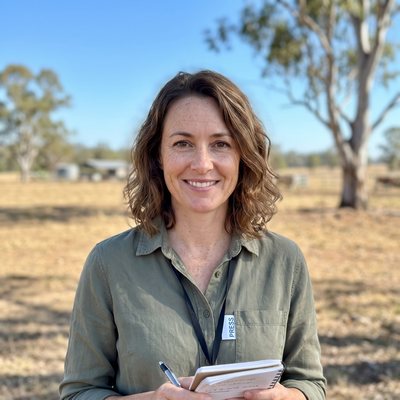
Tess Barlow
Senior Business Reporter at Homegrown AU. 15 years covering small business, agriculture and manufacturing across regional Australia. Previously a rural reporter for regional dailies on the Darling Downs and Wide Bay.